Encrypt Symmetric
Encrypt Symmetric allows to encrypt data with a unique Key. This Key needs to be the same to Encrypt and Decrypt.
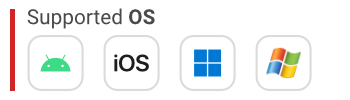
Action available for the following operating systems:
Parameters
- Data Type<numeric> - Select a File or Text to be Encrypted.
- Dynamic
- 1 - File
- 2 - Text UTF-16 LE
- 3 - Text ANSI/Binary
- 4 - Text UTF-8
- Dynamic
- Source Text<String> - Select a File/Text/Variable or control to be Encrypted.
- Target<> - Select a Variable or Control.
- Resulting Encoding<numeric>
- Dynamic
- 1 - None (Binary)
- 2 - Base 64
- Dynamic
- Algorithm<numeric> - Select the algorithm to be used:
- Dynamic
- 1 - AES CBC PKCS5 Padding
- 2 - AES EBC PKCS5 Padding
- Dynamic
- Key Type<numeric>
- Dynamic
- 1 - 128 bit key
- 2 - 256 bit key
- 3 - Generate SHA256 from key
- 4 - Generate HMAC SHA256 from key
- Dynamic
- Key<string> - Fill with a String, Control or Variable. It is expected the binary key value, without any encoding like Base64 or other.
- Salt<string> - In cryptography, salt is random data that is used as an additional entry for a unidirectional function that "breaks" data, a password or passphrase. Salts are used to protect passwords in storage. To use fill with a String, Control or Variable. It is expected the binary key value, without any encoding like Base64 or other.
- Nbr. of Rounds<numeric> - Fill with a Numeric value, Control or Variable.
- IV Type<> - Select a Initialization vector (IV):
- Provided (in this case you have to provide the initialization vector in IV parameter).
- Generate Random (in this case Kalipso will generate a random initialization vector and it will return it in IV target).
- IV / IV Target<numeric> - Select a Variable or a Control.
- Appended Result to IV<> - Select Yes or No. If you select Yes, the result of this action will start with the initialization vector, followed by the encrypted value.